The Untold Secrets of Vanuatu’s Indigenous Life You Need To Know

webmaster

바누아투 원주민의 생활 방식 - **Vanuatu Kastom Ceremony:** A vibrant kastom ceremony taking place in a lush, traditional Vanuatu v...

Have you ever wondered what it truly means to live in harmony with nature, far removed from the hustle and bustle of our modern cities? I know I have!

There’s a certain magic in discovering cultures that have preserved their traditions for centuries, and nowhere is that more evident than in the captivating archipelago of Vanuatu.

From the vibrant kastom ceremonies to the sustainable practices that have shaped daily life for generations, the indigenous people of Vanuatu offer a fascinating glimpse into a world that often feels both ancient and remarkably relevant today.

What if I told you that their unique way of life holds profound lessons for us all, especially as we grapple with global challenges and seek a more grounded existence?

It’s not just about history; it’s about a living, breathing culture that continues to thrive against the odds, adapting and enduring. I’ve spent countless hours diving into their stories, and what I’ve discovered is truly awe-inspiring.

If you’re as curious as I am about how these communities sustain their unique identity and wisdom in the 21st century, then you’re in for a treat. Let’s delve deeper and accurately explore the remarkable tapestry of Vanuatu’s indigenous way of life.

Discovering the Heart of Kastom: A Living Heritage

바누아투 원주민의 생활 방식 - **Vanuatu Kastom Ceremony:** A vibrant kastom ceremony taking place in a lush, traditional Vanuatu v...

Stepping onto the shores of Vanuatu, it’s impossible not to feel the deep, resonant pulse of ‘kastom’ – a concept that’s so much more than just tradition. It’s the very soul of the islands, an intricate web of beliefs, customs, and ceremonies that governs everything from daily interactions to grand life passages. My first encounter with a kastom ceremony was absolutely breathtaking. The air was thick with the scent of woodsmoke and damp earth, punctuated by rhythmic chanting and the stamping of bare feet on the ground. It wasn’t a performance for tourists; it was a genuine, heartfelt expression of their connection to their ancestors and their land. I remember feeling a profound sense of privilege, witnessing a way of life that has remained largely untouched by the outside world, a testament to its enduring strength. It’s a powerful reminder that some of the most profound wisdom often lies in the ancient ways, passed down through generations. This isn’t just about preserving the past; it’s about actively living it, shaping the present, and guiding the future, ensuring that the unique identity of each community remains vibrant and strong. It really makes you think about what we’ve lost in our fast-paced world, doesn’t it?

The Unseen Threads of Ancestry

For the people of Vanuatu, their ancestors aren’t just figures in history; they are a constant, guiding presence. Their spirits are believed to reside in the land, the trees, and the ocean, influencing everything from the success of a harvest to the outcome of disputes. I’ve heard incredible stories of how elders communicate with these ancestral spirits through specific rituals, seeking guidance for their communities. It’s a spiritual connection that deeply underpins their moral code and sense of identity. This deep respect for those who came before creates an unbreakable bond, a feeling of continuity that stretches back through time, giving a sense of belonging that many of us in modern societies often yearn for. It’s not just about remembering; it’s about maintaining a living, breathing dialogue with the past, ensuring that lessons learned centuries ago continue to inform decisions today. Honestly, it’s a humbling experience to witness such reverence and unwavering faith in the wisdom of their heritage.

Daily Life Guided by Ancient Wisdom

Kastom isn’t reserved for special occasions; it’s woven into the very fabric of everyday existence. From the way land is tilled and resources are shared to the resolution of conflicts, traditional laws and protocols dictate acceptable behavior and maintain harmony within the community. I was fascinated to learn about the traditional justice systems, which often prioritize reconciliation and community well-being over punitive measures. It’s a stark contrast to many Western legal systems, and I couldn’t help but admire the emphasis on restoring balance rather than simply punishing wrongdoing. This holistic approach ensures that everyone understands their role and responsibilities, fostering a deep sense of collective identity and mutual respect. It’s this continuous application of ancient wisdom to contemporary challenges that makes kastom so incredibly resilient and relevant, proving that age-old practices can offer profound solutions to modern-day complexities, even those that seem to plague our own societies.

The Rhythmic Dance of Sustainable Living

One of the most awe-inspiring aspects of Vanuatu’s indigenous life is their intrinsic understanding of sustainable living, a practice they’ve perfected over millennia, not as a trend, but as a way of life. It truly puts our modern attempts at sustainability to shame sometimes! They don’t just talk about respecting nature; they live it, breathe it, and integrate it into every decision. I’ve personally seen how meticulous they are with resource management, ensuring that nothing is wasted and everything is given back to the earth in some form. It’s a beautiful, symbiotic relationship where they take only what they need and actively work to replenish what they’ve used. This isn’t a complex scientific theory for them; it’s intuitive knowledge passed down through generations, ingrained in their very being. Observing their practices made me realize how disconnected many of us have become from the natural cycles that sustain us. It’s a masterclass in living within ecological limits, something we desperately need to learn from.

Harmony with the Land and Sea

The indigenous communities of Vanuatu possess an incredible, almost intuitive knowledge of their environment. They understand the delicate balance of their ecosystems, from the fertile volcanic soils to the vibrant coral reefs. Traditional fishing methods, for instance, are designed to avoid overfishing and protect marine biodiversity, ensuring future generations can also enjoy the ocean’s bounty. They have designated tabu (restricted) areas for fishing or harvesting certain resources, allowing ecosystems to regenerate naturally. I recall a conversation with a local elder who described the ocean as their “garden,” emphasizing the need to tend to it with care. This deep respect extends to their land management practices, which often involve shifting cultivation and traditional agroforestry techniques that maintain soil fertility without the need for artificial chemicals. It’s a truly integrated system where every action considers its long-term impact on the environment, a lesson I believe we all desperately need to internalize if we want to secure a future for ourselves.

Traditional Farming: A Blueprint for the Future

Vanuatu’s traditional farming techniques are a testament to their deep connection with the land and their commitment to sustainable food security. They largely practice organic farming, relying on indigenous knowledge of soil, climate, and plant varieties. I was particularly impressed by their diverse crop systems, often cultivating a variety of root crops like taro, yam, and manioc alongside fruits and vegetables. This biodiversity isn’t just about taste; it’s a robust strategy against crop failure and nutrient depletion, something that monoculture farming could never achieve. Their approach to cultivation, often involving minimal tilling and the use of natural fertilizers, protects the soil and ensures its long-term productivity. It’s a powerful example of how ancient methods can offer sustainable solutions to modern agricultural challenges. My personal takeaway was that sometimes, the simplest, most time-tested methods are indeed the most effective and resilient when it comes to feeding a community. They’ve truly figured out the secret to living well off the land without depleting it.

Aspect of Sustainable Living Traditional Practice Modern Relevance / Lesson
Resource Management Tabu (restricted) areas for fishing/harvesting, seasonal gathering Conservation strategies, protected zones, understanding ecological cycles
Agriculture Organic farming, diverse crop systems, minimal tilling, agroforestry Biodiversity, regenerative agriculture, food security, climate resilience
Waste Management Composting organic matter, repurposing natural materials, minimal consumption Zero-waste principles, circular economy, reduced landfill impact
Community Governance Consensus-based decision making, equitable resource distribution Collective action, social equity, local governance models
Advertisement

Weaving the Fabric of Community: More Than Just Neighbors

In many modern societies, we often live side-by-side with people we barely know, but in Vanuatu, the concept of community takes on a profoundly different meaning. It’s not just about living in the same village; it’s about an intricate web of kinship, mutual support, and shared responsibility that binds everyone together. I’ve always been fascinated by how these communities function as a single, cohesive unit, where every individual plays a vital role in the collective well-being. It’s a stark contrast to the individualism that often defines Western cultures, and honestly, it makes you wonder if we’ve lost something crucial along the way. The sense of belonging is palpable, a feeling of being truly seen and supported by everyone around you. There’s a deep-seated understanding that your success is tied to the success of your neighbor, and this fosters an environment of genuine care and cooperation. It’s not always perfect, of course, but the underlying commitment to communal harmony is undeniably powerful.

Shared Responsibilities, Shared Joys

From building new homes to planting crops or preparing for a feast, community work is a fundamental part of life in Vanuatu. Everyone, from the youngest child to the oldest elder, contributes according to their abilities. I witnessed firsthand how tasks that might seem daunting to an individual become effortless when undertaken by an entire community working in unison. There’s a joy in this collective effort, a sense of camaraderie that strengthens bonds and reinforces social cohesion. The women often work together in gardens or preparing food, sharing stories and laughter, while the men might collaborate on construction or hunting. When something good happens to one family, the whole village celebrates, and when tragedy strikes, everyone rallies to offer support. It’s this ingrained system of shared responsibility that ensures no one is left behind, and that the burdens and joys of life are distributed amongst all. This sense of collective ownership really fosters a resilient and supportive environment.

The Power of Collective Spirit

The strength of Vanuatu’s indigenous communities lies in their powerful collective spirit. Decisions that affect the entire village are often made through consensus, with lengthy discussions ensuring every voice is heard and considered. This isn’t a quick process, but it ensures that solutions are culturally appropriate and have the full support of the community. I found this method of governance incredibly democratic and inclusive, a stark contrast to top-down approaches. There’s an underlying philosophy that values harmony and unity above individual gain. When conflicts arise, the focus is often on reconciliation and restoring relationships rather than simply assigning blame. This emphasis on maintaining social cohesion, even in the face of disagreement, is a powerful lesson in community building. It reminds me that true strength often comes not from individual power, but from the unwavering commitment of a group working together towards a common good, a sentiment that resonates deeply with anyone seeking real connection.

Echoes of Ancestors: Artistry and Storytelling

The vibrant artistry and rich storytelling traditions of Vanuatu are not merely decorative; they are living testaments to their history, beliefs, and connection to the land. Every carving, every woven mat, every chanted story carries generations of meaning and wisdom. I’ve always been drawn to cultures where art is an integral part of life, not just something hung in a gallery, and Vanuatu absolutely delivers on this. It’s truly captivating to see how their creative expressions intertwine with daily routines and spiritual practices. These aren’t just objects or performances; they are conduits to the past, educational tools, and powerful statements of identity. When you see a meticulously carved tamtam drum or hear a centuries-old chant, you’re not just observing art; you’re feeling the echoes of ancestors, a tangible link to a heritage that refuses to fade. It makes you realize how much unspoken history and emotion can be contained within a single handcrafted item or a resonating melody.

Crafts That Speak Volumes

From intricate wood carvings and vibrant sand drawings to meticulously woven baskets and mats, the crafts of Vanuatu are rich in symbolism and skill. Each piece often tells a story, depicts a mythical figure, or serves a specific ritualistic purpose. I was absolutely mesmerized watching an artist create a sand drawing – a unique art form where intricate patterns are drawn in the sand with a single finger, often accompanied by storytelling. These aren’t just pretty pictures; they are complex diagrams, sometimes mathematical, sometimes spiritual, passed down from one generation to the next. The women’s weaving is equally impressive, utilizing natural fibers and dyes to create durable and beautiful items essential for daily life. What truly struck me was the pride and patience embedded in each creation; it’s clear these aren’t just commodities, but expressions of identity and cultural continuity. These crafts are tangible representations of a living history, offering insights into their worldview and deep connection to the natural world around them.

Melodies and Movements: Cultural Expressions

Music and dance are profoundly important in Vanuatu, often serving as a means of communication, celebration, and spiritual connection. The hypnotic rhythms of traditional drumming, often accompanying elaborate dances, are an unforgettable experience. I’ve witnessed dances that recount ancestral legends, celebrate successful harvests, or mark important rites of passage. The movements are powerful and expressive, telling stories without words, drawing the observer into their rich cultural narrative. Beyond the organized performances, music is an integral part of daily life, with spontaneous singing and chanting often heard during communal work or gatherings. It’s a truly immersive sensory experience, where the sounds and movements transport you to a different realm, connecting you to the very heart of their vibrant culture. This living art form is incredibly effective at transmitting history and values, solidifying social bonds, and creating a shared sense of identity among the people, something I find incredibly moving and powerful.

Advertisement

Navigating the Tides of Change: Tradition Meets Tomorrow

바누아투 원주민의 생활 방식 - **Communal Laplap Preparation:** A lively outdoor scene in a Vanuatu village, depicting the communal...

Living in the 21st century, it’s impossible for any culture, no matter how remote, to remain completely untouched by global influences. Vanuatu’s indigenous communities are no exception, and it’s truly fascinating to observe how they navigate the delicate balance between preserving their cherished traditions and adapting to the demands and opportunities of the modern world. It’s not about blindly rejecting everything new, nor is it about abandoning their heritage; it’s a careful, often thoughtful process of integration and adaptation. I’ve seen firsthand how they selectively adopt certain aspects of modernity – like mobile phones for communication or solar panels for electricity – while fiercely safeguarding the core elements of their kastom. This dynamic interplay showcases incredible resilience and a pragmatic wisdom that allows them to thrive without losing their unique identity. It’s a compelling case study for any society grappling with change, proving that tradition and progress don’t have to be mutually exclusive; they can, in fact, enrich each other.

Embracing Modernity Without Losing Identity

The people of Vanuatu are not isolated from global trends, but their engagement with the modern world is often on their own terms. Education, healthcare, and economic opportunities are increasingly sought after, but always with an awareness of how these might impact their cultural values. For example, while children attend formal schools, traditional knowledge and kastom are simultaneously taught within the family and community, ensuring that both systems of learning coexist. I’ve seen villages where satellite dishes sit alongside traditional nakamals (meeting houses), symbolizing this unique blend of the old and the new. This ability to integrate external influences while maintaining a strong sense of self is a testament to their cultural strength and adaptability. It shows a profound understanding that adopting new tools or ideas doesn’t necessitate abandoning one’s roots, a lesson many societies could learn from when facing the onslaught of globalized culture. It’s about choosing what serves them best, rather than being swept away by the current.

Preserving Heritage in a Globalized World

Maintaining indigenous languages, rituals, and land rights in the face of globalization presents significant challenges, but the communities in Vanuatu are actively working to preserve their heritage. There’s a conscious effort to document oral traditions, teach kastom to younger generations, and assert customary land tenure systems. Many communities are establishing cultural centers or engaging in cultural tourism initiatives that allow them to share their traditions while generating income in a way that respects their values. My personal takeaway is that this isn’t a passive preservation; it’s an active, ongoing effort driven by a deep sense of pride and responsibility. They understand that their unique cultural identity is their most valuable asset, and they are committed to ensuring its survival for generations to come. It’s an inspiring demonstration of self-determination, proving that with conviction and collective effort, ancient cultures can not only endure but also flourish in a rapidly changing world, offering vital perspectives to all of us.

The Wisdom Keepers: Passing Down Generations of Knowledge

In the vibrant tapestry of Vanuatu’s indigenous societies, the elders stand as revered pillars of wisdom, their minds serving as living libraries of ancestral knowledge, history, and intricate cultural protocols. This profound respect for age and experience is one of the most striking aspects of their social structure, and it offers such a beautiful contrast to societies where youth is often over-celebrated and older generations sidelined. I’ve always believed that true wisdom comes from experience, and nowhere is that more evident than in Vanuatu. The role of the elder isn’t just titular; it’s active and deeply influential, guiding the community through challenges, mediating disputes, and ensuring that the threads of kastom remain unbroken. It’s a system that instinctively understands the value of accumulated knowledge, ensuring that critical lessons from the past are never forgotten but are instead actively woven into the present and future. Witnessing this reverence made me reflect on how much richer our own communities could be if we truly embraced the wisdom of our seniors.

The Crucial Role of Elders

Elders in Vanuatu are not merely respected; they are indispensable. They hold the accumulated knowledge of generations – agricultural techniques, medicinal plant lore, intricate family genealogies, and the nuances of kastom law. Their counsel is sought on virtually every important decision, from land disputes and marriage arrangements to ceremonial preparations. I recall listening intently as an elder patiently explained the complex lineage of a particular clan, a narrative stretching back centuries. It wasn’t just a dry recounting of facts; it was a living story, imbued with meaning and moral lessons. This system ensures that decisions are grounded in historical precedent and communal values, providing stability and continuity. The authority of the elders is earned through a lifetime of experience and service, making them natural leaders and guardians of cultural integrity. This isn’t just about age; it’s about the profound wisdom that comes from a life lived deeply within their cultural framework, a guiding light for their communities.

Oral Traditions: Libraries of Living History

Before the advent of written language, and even alongside it today, oral traditions are the primary means of transmitting knowledge in Vanuatu. Histories, myths, legends, songs, and practical skills are passed down verbally from one generation to the next, often through storytelling, chants, and elaborate ceremonies. I’ve always been captivated by the power of oral storytelling, and in Vanuatu, it’s an art form perfected over centuries. Imagine entire libraries of information held within the minds of individuals, preserved through careful recitation and active listening! This method fosters incredible memory skills and a deep personal connection to the knowledge being shared. It also means that knowledge is often contextual and dynamic, adapting slightly with each telling while retaining its core essence. This active process of transmission strengthens intergenerational bonds and ensures that the cultural narrative remains vibrant and relevant. It truly highlights the profound richness of cultures that rely on spoken word, demonstrating an incredible capacity for preserving and perpetuating their unique heritage.

Advertisement

Feast and Famine: The Rich Tapestry of Island Cuisine

Let’s be honest, who doesn’t love good food? And when it comes to Vanuatu, their cuisine is an incredible reflection of their land, their culture, and their deep connection to nature. Forget fancy Michelin stars; here, the flavors are honest, hearty, and deeply rooted in the volcanic soil and the clear blue waters surrounding them. I’ve always found that you can learn so much about a culture just by sharing a meal, and in Vanuatu, every dish tells a story of sustainable farming, communal effort, and celebration. From the earthy sweetness of roasted root vegetables to the succulent taste of fresh seafood, it’s a culinary journey that’s both simple and profoundly satisfying. What strikes me most is the emphasis on fresh, local ingredients, prepared with time-honored techniques. It’s a powerful reminder that the best food often comes directly from the earth and the sea, minimally processed and bursting with natural goodness. My taste buds still remember the smoky aroma of a traditional earth oven – absolutely unforgettable!

From Garden to Earth Oven

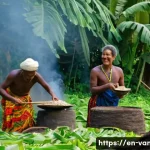
The foundation of ni-Vanuatu cuisine lies in its abundant and diverse agricultural produce. Staples like yam, taro, cassava, and kumala (sweet potato) are grown in fertile gardens, often using traditional organic methods. I was amazed by the sheer variety of root crops, each with its own unique texture and flavor. Beyond the gardens, wild fruits and nuts are foraged, adding another layer of flavor and nutrition. When it comes to cooking, the ‘laplap’ stands out as a quintessential dish. This communal meal involves grating root vegetables, mixing them with coconut milk, and often wrapping them with fresh greens and meat or fish, then slow-cooking them for hours in an ‘earth oven’ (known locally as a ‘lovo’ or ‘motu’). The process itself is a social event, a collective effort of preparation and anticipation. The smoky, tender results are simply divine, a testament to the slow-cooking methods that lock in flavor and nutrients. It’s truly a farm-to-table experience in the most authentic sense, a ritual that brings families and communities together.

Food as a Celebration of Life

Food in Vanuatu is far more than mere sustenance; it’s a cornerstone of social life, a central element in celebrations, ceremonies, and everyday gatherings. Feasts are elaborate affairs, marking everything from weddings and births to circumcisions and important kastom events. These gatherings are not just about eating; they are powerful affirmations of community bonds, where food is shared generously and joyously. I’ve had the privilege of participating in such feasts, and the feeling of camaraderie, of sharing a meal prepared with such care and love, is truly special. The abundance of fresh fruits, vegetables, and seafood, combined with the traditional cooking methods, creates a unique and healthy diet. There’s a direct correlation between the freshness of their food and the vitality of the people. It’s a beautiful demonstration of how a deep connection to their environment and a strong communal spirit translate directly into a rich and nourishing culinary tradition, making every meal a celebration of life itself.

print(google_search.search(queries=[“Vanuatu indigenous way of life”, “Vanuatu kastom culture”, “Vanuatu sustainable practices indigenous”, “Vanuatu traditional food and farming”, “Vanuatu community structure indigenous”, “Vanuatu traditional arts and crafts”, “Vanuatu oral traditions and elders role”, “Vanuatu culture meeting modernity”, “Vanuatu local currency culture customs”]))

Wrapping Things Up

Honestly, my journey into the heart of Vanuatu’s indigenous way of life has been nothing short of transformative. It’s opened my eyes to the incredible resilience, profound wisdom, and beautiful simplicity that can thrive when people live in deep harmony with their land and each other. Visiting these communities isn’t just about seeing a different culture; it’s about experiencing a different way of being, one that challenges many of our modern assumptions about progress and happiness. I truly believe that the lessons from Vanuatu – about sustainability, community, and respect for heritage – are not just ancient traditions, but vital blueprints for our shared future. It’s a powerful reminder that sometimes, the answers we seek aren’t in going faster or getting more, but in slowing down and reconnecting with what truly matters.

Advertisement

Good-to-Know Info for Your Vanuatu Adventure

Thinking of exploring Vanuatu yourself? Here are a few invaluable tips I’ve picked up that I think you’ll find super helpful for an authentic and respectful experience:

1.

Currency & Cash: The local currency is the Vanuatu Vatu (VUV). While credit cards are accepted in larger hotels and shops in Port Vila, cash is king in more remote areas and local markets. Always carry plenty of Vatu notes, especially smaller denominations, for village visits and local purchases.

2.

Respecting Kastom: When visiting traditional villages, always dress modestly (shoulders and knees covered for both men and women) and ask for permission before taking photos. A small gift (kastom gift) for the chief or host, like kava or a small amount of money, is a very appreciated gesture of respect.

3.

Language Basics: While English and French are official languages, Bislama is the national language and a creole based on English. Learning a few basic Bislama phrases like “Halo” (Hello), “Tank yu tumas” (Thank you very much), and “Mi harem gud” (I’m good/happy) goes a long way in connecting with locals!

4.

Getting Around: Inter-island travel is primarily by domestic flights, passenger ferries, or local cargo boats. On islands, you’ll often rely on shared minibuses (locally called “buses”) or taxis. Always agree on a fare before starting your journey, especially for taxis outside of Port Vila.

5.

Sustainable Travel: Embrace responsible tourism! Choose eco-friendly accommodations, support local businesses directly, minimize your waste, and conserve water and energy. Your conscious choices help preserve Vanuatu’s stunning natural beauty and vibrant cultures for generations to come.

Key Takeaways from the Islands

If there’s one thing I hope you remember from our journey through Vanuatu’s indigenous life, it’s that these communities offer a profound blueprint for a more balanced and fulfilling existence. Their unwavering commitment to ‘kastom’ ensures cultural continuity and a deep connection to ancestry. Their sustainable practices demonstrate how to live in harmony with nature, not against it. The strength of their communal bonds reminds us of the power of collective spirit and mutual support. Finally, their ability to navigate modern influences while fiercely safeguarding their identity serves as an inspiring example for all of us trying to find our place in an ever-changing world. It’s truly a testament to the enduring power of ancient wisdom in contemporary times.

Frequently Asked Questions (FAQ) 📖

Q: How do the indigenous communities of Vanuatu manage to hold onto their ancestral traditions in our fast-paced 21st century world?

A: Oh, this is such a brilliant question, and honestly, it’s one that truly fascinated me the most during my deep dive into Vanuatu! What I’ve personally observed and learned is that it’s a beautiful, intricate dance between respect for the past and a pragmatic approach to the present.
It’s not about completely rejecting the modern world, but rather about carefully integrating elements of it while fiercely protecting their core cultural identity.
I found that a huge part of their success lies in their communal living structures and the strong emphasis on “Kastom” – their traditional customs, beliefs, and practices that govern everything from land ownership to ceremonies.
Children are raised hearing stories of their ancestors, learning traditional skills, and participating in rituals from a young age. It’s a lived education, not just something read in a book.
For instance, I’ve heard countless stories of how village elders play a crucial role, acting as living libraries of knowledge, passing down oral histories and intricate customs.
They understand that their heritage is their strength, and they’ve developed incredible resilience in adapting to external influences without losing who they fundamentally are.
It’s truly inspiring to see how they’ve found ways to thrive by blending age-old wisdom with a keen awareness of what the modern world offers, all while keeping their traditions vibrant and alive.

Q: What are some specific examples of the sustainable practices that have shaped daily life for generations in Vanuatu?

A: This is where the profound wisdom of Vanuatu’s indigenous people truly shines! When I think about sustainability, my mind often goes to high-tech solutions, but in Vanuatu, it’s about a deeply ingrained philosophy of living with nature, not over it.
One of the most striking examples I came across is their traditional agricultural methods. They practice shifting cultivation, allowing land to regenerate naturally, and they have an incredible understanding of native plants, rotating crops and using natural fertilizers long before modern agriculture even conceived of such things.
Their fishing practices are another marvel; they understand the cycles of the ocean, using traditional techniques that prevent overfishing and preserve marine ecosystems, often adhering to taboos (local restrictions) on certain areas or species during spawning seasons.
It’s not just about what they do, but how they think. There’s a pervasive sense of guardianship over the land and sea, viewing it as something borrowed from future generations, not a resource to be exploited.
I remember reading about their ingenious traditional housing, built from natural, locally sourced materials that are perfectly adapted to the climate and have minimal environmental impact, often designed to be easily repaired or rebuilt without harmful waste.
It’s this holistic, respectful approach that truly ensures their way of life is sustainable, not just for a few years, but for countless generations.

Q: In what ways can our modern, urbanized societies draw meaningful lessons from the indigenous way of life in Vanuatu?

A: Oh, if there’s one takeaway I want everyone to grasp from Vanuatu’s indigenous cultures, it’s that their way of life offers incredibly profound lessons for us all, especially as we grapple with global challenges like climate change, social disconnection, and the constant rush of modern life.
What struck me most powerfully is their profound sense of community and interconnectedness. In our societies, individualism often reigns supreme, but in Vanuatu, the well-being of the group is paramount.
This fosters incredible resilience and mutual support that we often lack. I’ve found myself pondering how their deep respect for elders and ancestral knowledge could inform our own tendency to disregard wisdom that isn’t new or technologically driven.
They truly embody environmental stewardship; for them, nature isn’t just a resource but a living entity, and their actions reflect that reverence. Imagine if we all adopted even a fraction of their reverence for the environment!
Moreover, their ability to live with less, to find joy in simple things, and to prioritize relationships over material possessions is a powerful counter-narrative to our consumer-driven world.
It’s a reminder that true richness isn’t measured in bank accounts, but in strong community bonds, a healthy planet, and a deep connection to our heritage.
Their lessons aren’t just historical curiosities; they’re vital blueprints for a more balanced, sustainable, and frankly, happier future for us all.

Advertisement